Google’s Quantum Chip Breakthrough: Willow Rewrites Computing’s Future in Ways That Sound Impossible

The tech world just witnessed something that shouldn’t exist yet. Google dropped a bombshell that has scientists, investors, and even Elon Musk scrambling to understand what it means. Their new quantum chip called Willow just solved a problem in five minutes that would take our planet’s fastest supercomputer longer than the universe has existed. Yes, you read that correctly. Not years. Not millennia. We’re talking 10 septillion years—that’s a 10 with 24 zeros trailing behind it. To put this in perspective, the universe itself is only 13.8 billion years old. This isn’t just a technological leap. It’s a reality-bending moment that makes you wonder if science fiction just became science fact.
The Problem That Haunted Quantum Computing for Three Decades
Here’s the thing about quantum computing that nobody talks about enough. It’s been the tech industry’s beautiful disaster for almost 30 years. Scientists knew quantum computers could theoretically revolutionize everything—from discovering life-saving drugs to cracking climate change models. But there was always one killer problem standing in the way: errors.
Imagine trying to write a novel on a typewriter that randomly changes letters as you type. That’s essentially what happened with quantum computers. The fundamental building blocks called qubits are ridiculously fragile. They’re so sensitive that a stray electromagnetic wave from your phone could corrupt them. Even worse, adding more qubits—which you need for more computing power—just multiplied the errors exponentially. More power meant more problems. It was a vicious cycle that made scaling quantum computers seem impossible, and it’s exactly why researchers began exploring more stable architectures like the Quantum Chip to overcome these error-driven limitations.
Peter Shor, a brilliant mathematician at MIT, proposed a solution back in 1995 called quantum error correction. The concept was elegant: use multiple physical qubits to create one “logical qubit” that could detect and fix its own errors. But here’s the catch—nobody could actually make it work at scale. For decades, every attempt hit the same wall. When teams added more qubits to reduce errors, the errors actually increased instead. The dream of quantum computing seemed permanently stuck in theoretical papers and research labs.
Then Google’s Quantum AI team did something nobody expected. They cracked it.
Willow Changes Everything With a Trick That Defies Logic
The breakthrough sounds impossible when you first hear it. Google’s researchers took their Willow quantum chip and ran a series of tests using increasingly larger grids of qubits. They started with a 3×3 grid, then expanded to 5×5, and finally 7×7. Logic says errors should have skyrocketed with each expansion. That’s what happened in every previous attempt by every research team worldwide.
But Willow did the opposite. Each time Google doubled the number of qubits, the error rate was cut in half. This exponential error reduction is what scientists call achieving “below threshold” performance—the holy grail that’s eluded researchers since quantum error correction was first theorized. This breakthrough is precisely why many experts believe the Quantum Chip architecture will play a central role in enabling the kind of stable, scalable performance long considered out of reach.
Think about what this actually means. It’s like discovering that the more passengers you add to a plane, the safer and more stable the flight becomes. It violates everything we’ve learned about complex systems, where more components typically mean more failure points. Yet here we are, watching quantum mechanics bend our understanding of what’s possible.
The implications ripple outward like shockwaves. This isn’t just an incremental improvement or a modest breakthrough. This is the moment where quantum computing transitions from “interesting science experiment” to “technology that will reshape civilization.” And at the center of this shift is the Quantum Chip, the catalyst turning theoretical potential into real-world capability. The dam just broke, and now the floodgates are open.
Five Minutes to Achieve the Impossible
Google tested Willow’s capabilities using something called random circuit sampling—basically the quantum computing equivalent of a stress test. This benchmark is deliberately designed to be hideously difficult for classical computers but theoretically manageable for quantum systems. It’s the entry exam that separates real quantum computers from expensive paperweights.
Willow completed this computational challenge in under five minutes. When researchers calculated how long it would take Frontier—currently the world’s most powerful classical supercomputer—to do the same task, the numbers broke their brains. Ten septillion years. To write it out: 10,000,000,000,000,000,000,000,000 years. It’s this incomprehensible performance gap that shows why the Quantum Chip architecture is redefining what’s computationally possible.
The entire observable universe has been around for roughly 13.8 billion years. Willow’s benchmark would require Frontier to run for about 725 quadrillion times longer than the universe has existed. These aren’t the kind of numbers you encounter in normal engineering. These are the numbers that make physicists start talking about parallel universes and the multiverse—concepts that sound like Marvel movie plots but are actually serious scientific theories.
David Deutsch, a pioneering physicist, has long argued that quantum computation must be happening across multiple parallel universes simultaneously. Otherwise, where is all this computational power coming from? Willow’s performance gives weight to this mind-bending idea. When you can accomplish in minutes what would take longer than cosmic time itself, you’re no longer playing by the rules of classical physics—and technologies like the emerging Quantum Chip push that boundary even further.
Inside the Santa Barbara Facility Where Tomorrow is Being Built
Willow wasn’t created in some generic laboratory. Google built a specialized fabrication facility in Santa Barbara, California, specifically designed from the ground up for quantum chip manufacturing. Only a handful of such facilities exist anywhere on Earth. The precision required is almost absurd.
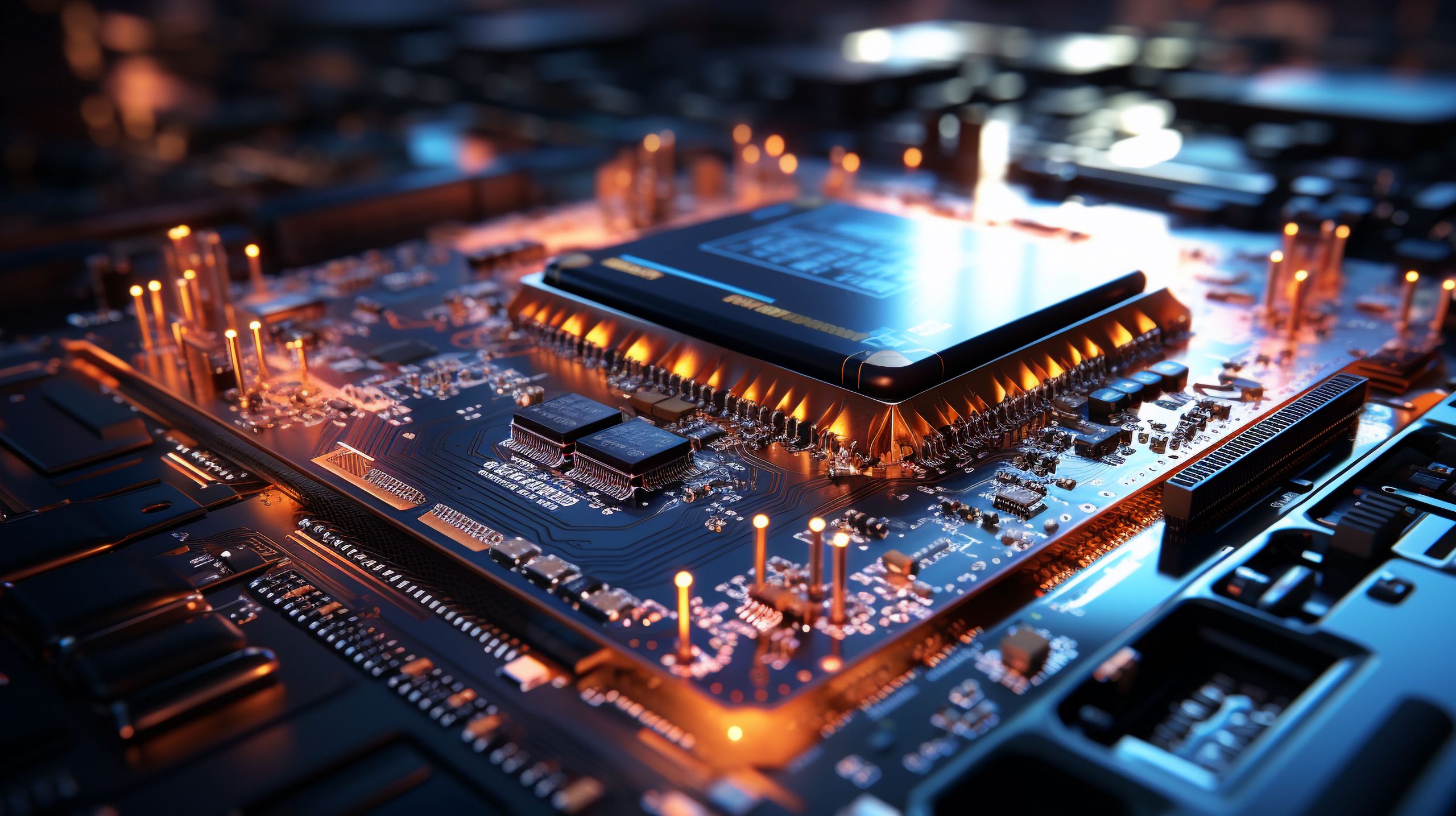
Each of Willow’s 105 qubits must be fabricated to near-perfect specifications. The chip operates at temperatures colder than outer space—just a hair above absolute zero. At these temperatures, quantum effects that are normally invisible in our everyday world become dominant. Particles can exist in multiple states simultaneously, a property called superposition. They can also exhibit entanglement, where qubits become mysteriously connected regardless of physical distance—phenomena that lie at the core of every advanced Quantum Chip architecture.
But manufacturing quantum chips isn’t just about getting individual components right. System engineering becomes crucial. Every element—single-qubit gates, two-qubit gates, qubit reset mechanisms, and readout systems—must function flawlessly while working together harmoniously. If one component lags or two components conflict, the entire chip’s performance plummets. It’s like building a Formula 1 race car where every bolt matters.
Google’s latest advances pushed Willow’s T1 times—which measure how long qubits can maintain quantum states—to nearly 100 microseconds. That’s five times longer than their previous generation chips. It sounds like a tiny amount of time, but in the quantum world, microseconds are eternities. These improvements compound across the entire system, creating performance gains that surpass what anyone thought possible just two years ago—showcasing how far Quantum Chip engineering has evolved in such a short span.
What This Actually Means for Your Life (Sooner Than You Think)
The trillion-dollar question hanging over quantum computing has always been: when will this actually matter to regular people? Google believes Willow brings that timeline forward dramatically.
Drug discovery stands to be revolutionized first. Right now, developing a new medication costs billions and takes over a decade. Researchers must painstakingly simulate how molecules interact, testing thousands of combinations. Classical computers struggle with these quantum-scale simulations because they’re trying to model systems that operate by quantum rules using non-quantum hardware. It’s like trying to simulate ocean waves using only photographs—you miss the fundamental dynamics.
Quantum computers like Willow could simulate molecular interactions with perfect accuracy. This means researchers could identify promising drug candidates in months instead of years. Cancer treatments, Alzheimer’s therapies, antibiotic-resistant bacteria solutions—all could arrive faster. When your child gets sick decades from now, the medicine that saves them might exist only because advanced Quantum Chip technology made it possible to discover.
Energy technology represents another frontier. Climate change demands better batteries for electric vehicles, more efficient solar panels, and revolutionary grid storage solutions. These challenges all boil down to materials science—finding new materials with specific quantum properties. Willow-class quantum computers could explore the vast space of possible materials exponentially faster than any classical approach. The breakthrough battery or superconductor that enables clean energy at scale might emerge from quantum simulations running on future iterations of chips like Willow.
Artificial intelligence itself could be transformed. Training large AI models requires immense computational resources. Quantum algorithms could accelerate certain types of machine learning, making AI development faster and more efficient. The irony isn’t lost on researchers: quantum computing, powered by advanced Quantum Chip architectures, might be essential for creating the next generation of artificial intelligence, which in turn helps design even better quantum computers. It’s a virtuous cycle that could compound innovation rapidly.
Financial modeling, logistics optimization, weather prediction, cryptography—the list of fields facing quantum disruption grows longer every day. And unlike previous “revolutionary” technologies that took decades to materialize, quantum computing is progressing faster than nearly anyone predicted.
The Competition is Fierce and the Stakes Have Never Been Higher
Google isn’t working in a vacuum. IBM has invested billions in quantum computing and recently launched their Quantum System Two. Microsoft is pursuing topological qubits through Azure Quantum. Amazon has entered the race with Braket. China’s government has poured massive resources into quantum research as a matter of national security. This isn’t just a tech race—it’s a new space race for the 21st century.
What makes Willow significant is that it achieved below-threshold error correction first. This isn’t about bragging rights. Whoever perfects quantum error correction first gains an enormous advantage. They’ll be first to run useful algorithms, first to solve real-world problems, first to commercialize applications. The country and companies that lead in Quantum Chip technology and quantum computing will dominate the next economy.
The geopolitical implications are staggering. Quantum computers powerful enough could potentially break current encryption standards, threatening everything from banking systems to military communications. Nations are already racing to develop “quantum-resistant” encryption before quantum computers become too powerful. It’s a cryptographic arms race happening behind the scenes while most people scroll through social media unaware.
The Skeptics Have Valid Points Worth Considering
Not everyone is convinced that Willow lives up to the hype. Some quantum computing researchers point out that Google’s benchmark—random circuit sampling—doesn’t actually do anything useful yet. It’s an impressive computational feat with no practical application. Critics argue we’re still years or decades away from quantum computers that can tackle commercially relevant problems better than classical computers.
There’s also the question of reproducibility. Can other teams verify these results independently? Google published their research in Nature, a prestigious peer-reviewed journal, which lends credibility. But the quantum computing field has seen bold claims before that didn’t fully pan out when scrutinized. In 2019, Google announced quantum supremacy, only to have IBM challenge the claim by showing classical computers could perform the same task faster than Google estimated. This history underscores why verification of Quantum Chip–based breakthroughs is critical for establishing trust and advancing the field.
The technical limitations remain substantial. Willow’s error rates, while dramatically improved, still aren’t low enough for running complex algorithms that would solve real-world problems. Experts estimate error rates need to drop by another order of magnitude or more before quantum computers can run commercially useful programs reliably. That’s still a massive challenge.
Cost is another elephant in the room that Google’s announcement glosses over. Building and maintaining quantum computers requires expensive specialized facilities, ultra-low temperatures, and significant expertise. Even if quantum computers prove commercially viable, access might be limited to large corporations and governments for years, especially given the complexity and expense of producing advanced Quantum Chips.
The Next Chapter is Being Written Right Now
Google has laid out a clear roadmap with Willow serving as a crucial waypoint. The next milestone involves running what they call “useful, beyond-classical” computations—algorithms that both solve real-world problems AND surpass what classical computers can do. Previous quantum experiments fell into two categories: impressive but useless benchmarks, or useful simulations that classical computers could still match. The goal is achieving both simultaneously.
Hartmut Neven, who founded Google Quantum AI back in 2012, sees quantum computing and artificial intelligence as deeply intertwined. He named his lab “Quantum AI” deliberately, believing quantum computers—and the next-generation Quantum Chips that power them—will be indispensable for advancing AI. The two technologies could fuel each other’s development in ways we’re only beginning to understand.
Google has also opened its quantum computing resources to researchers worldwide. They offer open-source software and educational programs, including a Coursera course on quantum error correction. This democratization of access could accelerate breakthroughs by bringing more brilliant minds into the field. The next major advance might come from a graduate student experimenting with Willow’s capabilities, not just Google’s internal team.
Looking Forward to a Quantum Future
Willow represents more than a technological achievement. It’s a statement that quantum computing—and the advanced Quantum Chips that make it possible—has arrived. The era of dismissing quantum computers as perpetually “20 years away” has ended. The timeline just compressed dramatically.
We’re standing at an inflection point. Think back to 1995 when the internet was new and most people couldn’t imagine how it would reshape everything. Quantum computing feels similar—simultaneously overhyped and somehow underestimated. The specific applications we imagine today will probably look quaint compared to what actually emerges.
What we know for certain is that Willow cracked a problem that has stumped scientists for three decades. Error rates now decrease as systems scale up instead of spiraling out of control. That single breakthrough removes the primary obstacle that made large-scale quantum computers seem impossible. Everything changes when the impossible becomes merely difficult—especially when breakthroughs in Quantum Chip technology make it achievable.
The next decade in computing won’t look anything like the last. Willow just proved it.
FAQs
Q: What makes Google’s Willow quantum chip different from regular computer chips?
A: Willow uses qubits that leverage quantum mechanics to perform calculations, allowing it to solve certain problems exponentially faster than traditional chips that use binary bits.
Q: When will quantum computers like Willow be available to consumers?
A: Commercial quantum computers for everyday consumers are likely still 5-10 years away, but businesses and researchers can already access quantum computing resources through cloud platforms.
Q: Can Willow break modern encryption systems?
A: Not yet. While powerful, Willow doesn’t have enough qubits or low enough error rates to threaten current encryption, though this remains a long-term concern as quantum computers advance.
Q: How much does it cost to build a quantum chip like Willow?
A: Google hasn’t disclosed specific costs, but quantum chip fabrication facilities require hundreds of millions in investment, with ongoing operational costs running into millions annually.
Q: What real-world problems will Willow help solve first?
A: Drug discovery and materials science are most likely, as quantum computers excel at simulating molecular interactions that classical computers struggle with.