
Netflix Warner Bros Acquisition: What It Means for Streaming

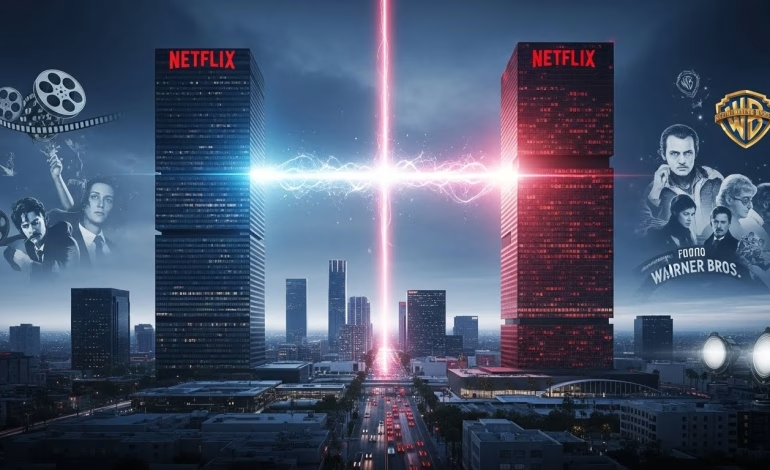
Something unprecedented just happened in Hollywood. While you were scrolling through your streaming queue last Friday, Netflix dropped a bombshell that sent shockwaves through every corner of the entertainment industry. The streaming giant announced its intention to acquire Warner Bros—not just any studio, but one of Hollywood’s oldest and most iconic names—in a deal valued at $82.7 billion. This breaking development, now widely referred to as the Netflix Warner Bros acquisition, isn’t just another corporate merger. This is the moment that could fundamentally alter how we watch movies, consume television, and experience entertainment for decades to come.
When the Netflix Warner Bros Acquisition Devours Hollywood’s Golden Legacy
Picture this: the company that revolutionized how we binge-watch television shows is now buying the studio that brought us Casablanca, The Dark Knight, and Friends. Netflix, the Silicon Valley disruptor that once mailed DVDs to your doorstep, is swallowing Warner Bros whole—a studio with 101 years of cinematic history etched into its very foundations. The irony cuts deep. Warner Bros helped build Hollywood’s golden age, created the studio system, and defined what blockbuster entertainment meant. Now, through the Netflix Warner Bros acquisition, it’s being absorbed by the very company many critics argue helped dismantle that old system.
The numbers alone make your head spin. Netflix is putting $72 billion in cash and stock on the table for Warner Bros’ streaming and studio assets. To put that in perspective, that’s more than Warner Bros Discovery’s entire market valuation of $60 billion. Netflix is essentially paying a premium of $12 billion just to ensure this deal happens. Why? Because what they’re really buying isn’t just a studio lot in Burbank or a collection of sound stages. Through the Netflix Warner Bros acquisition, they’re securing something far more valuable: a century’s worth of intellectual property that spans generations.
The Content Gold Mine That Makes This Deal Irresistible
In the context of the Netflix Warner Bros acquisition, it’s important to understand exactly what Netflix is actually obtaining. Here, we’re talking about more than just random films and television series. We are discussing the keys to some of the most valuable kingdoms in entertainment. Without accounting for merchandise, theme parks, or streaming value, the Harry Potter franchise alone has brought in over $9 billion at the box office worldwide. Batman, Superman, Wonder Woman, and a host of other superheroes that have shaped popular culture for eighty-five years are all part of the DC Universe. As the most popular show in HBO history, Game of Thrones gave rise to several spin-offs, such as House of the Dragon.
But here’s where it gets interesting. Netflix currently has over 300 million paying subscribers worldwide. Warner Bros Discovery, through HBO Max and Discovery+, adds approximately 128 million more subscribers to that equation. Overnight, Netflix would command a subscriber base approaching 430 million people—nearly half a billion viewers across the globe. That’s not just market dominance. That’s approaching monopolistic territory that makes regulators extremely nervous.
With the Netflix Warner Bros acquisition, the content library suddenly reads like a collection of contemporary entertainment’s greatest hits. The Lord of the Rings, The Matrix, Austin Powers, Friends, The Big Bang Theory, The Sopranos, The Wire, Succession, and literally thousands of other films become available on Netflix. These are more than just TV series and films. They serve as cultural touchstones that shape entire generations. Every franchise carries decades of fan loyalty, brand equity, and merchandising potential that could generate billions more dollars in revenue.
The Antitrust Storm Brewing in Washington
Here’s where things get complicated—and potentially explosive. Before the ink even dried on the press release, politicians from both sides of the aisle started sharpening their knives. Senator Elizabeth Warren, Massachusetts Democrat and longtime Big Tech critic, didn’t mince words. She called the deal “an anti-monopoly nightmare” and warned it threatens to create “one massive media giant with control of close to half of the streaming market.”
Think about what that means practically. A combined Netflix-HBO Max would control approximately 33% of the US streaming market. Amazon Prime Video sits at number two with 21% market share. That means Netflix would have roughly one-and-a-half times the market power of its closest competitor. That concentration triggers alarm bells at the Department of Justice under current antitrust guidelines, which flag any merger creating a market share above 30% for intense scrutiny.
When it comes to the Netflix Warner Bros acquisition, the regulatory maze facing this deal is genuinely daunting. The Justice Department must conduct a full antitrust review that typically takes 12–18 months minimum. The Federal Communications Commission needs to sign off because of Warner Bros’ broadcast properties. International regulators in Europe, where both companies have massive operations, will launch their own investigations. Each regulatory body has the power to block this deal entirely or impose conditions that might make it financially unattractive.
President Donald Trump added fuel to the fire during comments Sunday evening, acknowledging the deal “could be a problem” due to Netflix’s commanding market share. His administration has shown willingness to challenge major tech mergers, and this one lands right in the crosshairs of ongoing debates about Big Tech consolidation. The political calculus gets even more complex considering Trump’s relationship with Paramount Skydance CEO David Ellison, whose father Larry Ellison is a major Trump ally.
The Paramount Plot Twist Nobody Saw Coming
Speaking of Paramount, here’s where the story takes another dramatic turn. Just when everyone thought Netflix had secured its prize, Paramount Skydance launched what’s being called a “hostile takeover bid”—offering $108.4 billion for all of Warner Bros Discovery, not just the streaming and studio assets Netflix wants. Paramount is going directly to shareholders, offering $30 per share compared to Netflix’s $27.75, with a deadline of January 8th.
The Netflix Warner Bros acquisition isn’t just about money. It’s about ego, power, and reshaping Hollywood’s future. Paramount was considered the frontrunner for weeks before Netflix swooped in with what insiders called a “fully executable offer” that Warner Bros management couldn’t refuse. Paramount executives claim the process was “tilted and unfair,” alleging Warner Bros never seriously engaged with their six proposals submitted over 12 weeks. Their frustration is palpable in public statements accusing Warner Bros of favoring Netflix despite Paramount’s potentially superior offer.
The competitive tension reveals deeper industry anxieties. Traditional media companies like Paramount see Warner Bros as potentially their last chance to achieve the scale necessary to compete with Netflix and streaming giants. If Netflix succeeds in acquiring Warner Bros, it essentially removes a major rival and consolidates so much content power that competing becomes exponentially harder for everyone else.
Hollywood’s Existential Crisis Reaches Critical Mass
Walk onto any Warner Bros lot in Burbank right now and you’ll feel the anxiety in the air. Thousands of workers—from production crews to executives to creative talent—face profound uncertainty about their futures. The Writers Guild of America didn’t hold back in their response, stating bluntly.
The concerns surrounding the Netflix Warner Bros acquisition aren’t abstract. Every major media merger in recent history has resulted in substantial layoffs as companies eliminate redundant positions. When AT&T merged with Time Warner, approximately 4,000 jobs were cut. The Disney-Fox merger led to thousands more job losses. Netflix, known for its ruthlessly efficient approach to content production, could potentially eliminate entire departments that don’t fit its data-driven, streaming-first model.
Movie theater owners are particularly terrified. Their fear is rational. Netflix has historically resisted traditional theatrical windows, preferring day-and-date releases on its platform. Warner Bros currently releases 12-15 major theatrical films annually, generating billions in box office revenue and supporting thousands of movie theaters globally. If Netflix applies its streaming-first strategy to Warner Bros’ slate, theaters could lose a significant portion of their premium content.
The Netflix Warner Bros acquisition has prompted the Producers Guild of America to emphasize that “legacy studios are more than content libraries within their vaults are the character and culture of our nation.” That’s not hyperbole. Warner Bros has produced films that defined American cinema: The Jazz Singer (first talking picture), Gone with the Wind, Casablanca, Rebel Without a Cause, The Matrix, and Christopher Nolan’s Dark Knight trilogy. These films didn’t just entertain they shaped how generations of people understood storytelling, heroism, tragedy, and triumph.
What This Means for Your Wallet and Viewing Experience
Let’s get practical for a moment. You’re probably wondering: “What does this actually mean for me as a viewer?”
First, expect price increases. Whenever streaming services consolidate content, they gain pricing power. Disney+ raised prices after acquiring Hulu’s full control. Netflix itself has raised prices multiple times as its content library expanded. A combined Netflix-HBO Max bundle might cost you $25-30 monthly compared to current separate subscriptions totaling around $32. That looks like savings initially, but historical patterns suggest prices trend upward over time once competitors are eliminated.
Second, the Netflix Warner Bros acquisition likely intensifies content exclusivity. Warner Bros currently licenses shows to multiple platforms you can find Friends on several services, for example. Post-merger, Netflix will almost certainly pull everything exclusive to its own platform. That means more subscription juggling if you want access to specific content across multiple services.
Third, the theatrical experience changes dramatically. HBO Max currently maintains strong theatrical windows for major releases. Netflix traditionally opposes theatrical windows, preferring simultaneous streaming releases. If Netflix applies its model to Warner Bros’ 12-15 annual theatrical releases, you might lose the ability to see major films on big screens before they hit streaming, fundamentally altering the moviegoing experience.
The Global Chess Game Playing Out in Real Time
While American politicians debate antitrust concerns, regulators in Brussels are sharpening their pencils. European Union competition authorities have shown increasing willingness to challenge American tech dominance. They fined Apple €13 billion for tax arrangements, hit Google with multiple multibillion-euro penalties, and recently forced Meta to unbundle its services. A Netflix-Warner Bros merger consolidating market power over European audiences won’t escape their scrutiny.
The international dimension of the Netflix Warner Bros acquisition adds months and complexity to approval timelines. European Commission investigations typically take 12–18 months after filing. If they raise serious concerns, the deal could face demands for asset divestitures, behavioral remedies limiting pricing or exclusive content practices, or outright blocking. Similar reviews will happen in the United Kingdom, Australia, Canada, and other major markets where both companies operate.
China presents its own unique challenge. Both Netflix and Warner Bros have complex relationships with Chinese regulators and content markets. Netflix doesn’t operate directly in China, but Warner Bros has deep partnerships with Chinese production companies and distribution relationships. How this merger affects those arrangements—and whether Chinese regulators use it as leverage in broader tech policy disputes—remains an open question that could have multibillion-dollar implications.
Silicon Valley Meets Hollywood: Culture Clash Ahead
Here’s an underappreciated aspect of this deal: Netflix and Warner Bros represent fundamentally different corporate philosophies. Netflix is data-driven, algorithm-obsessed, efficiency-focused Silicon Valley through and through. Decisions about which shows get made, which get canceled, and how they’re marketed rely heavily on viewer metrics, completion rates, and algorithm-friendly patterns.
Warner Bros represents old-school Hollywood—gut instinct, creative vision, star power, and prestige. The Netflix Warner Bros acquisition highlights the contrast between this legacy approach and Netflix’s data-driven model. HBO, the crown jewel of Warner Bros’ holdings, built its reputation on quality-over-quantity, giving creators freedom to take risks, spending years developing perfect shows rather than churning out content for algorithm feeding. The Sopranos, The Wire, Game of Thrones—these shows succeeded precisely because creative teams had time, resources, and protection from metrics-driven interference.
What happens when Netflix’s data scientists meet HBO’s creative executives? Former WarnerMedia CEO Jason Kilar described Warner Bros culture as “theatrical DNA,” emphasizing big-screen experiences and filmmaker autonomy. Netflix has openly stated its focus is maximizing viewing hours per subscriber. Those philosophies don’t just conflict—they’re fundamentally incompatible. One of them will dominate the merged company, and early indications suggest Netflix’s approach will prevail.
The Ripple Effects Nobody’s Talking About Yet
Beyond the obvious impacts, this merger creates less visible but equally significant consequences. Independent film production faces an increasingly challenging environment. Warner Bros currently finances and distributes numerous independent films annually, giving emerging filmmakers pathways into the industry. If Netflix consolidates decision-making under its algorithm-driven model, those opportunities could disappear, reducing diversity of voices and stories in American cinema.
Television production companies face existential questions in the wake of the Netflix Warner Bros acquisition. Warner Bros Television Group produces shows for multiple networks and streaming services, functioning as a supplier to the entire industry. If Netflix owns that production capacity, why would they continue making shows for competitors? Expect Warner TV’s output for rival streamers to decline sharply or cease entirely, reducing options for platforms like Apple TV+, Amazon Prime, and others who currently rely on Warner TV content.
The advertising market faces disruption as well. Warner Bros Discovery recently invested heavily in ad-supported streaming on HBO Max. Netflix just launched its own ad tier. Combined, they would command roughly 35% of all streaming ad inventory, giving them massive leverage over advertisers. That concentration could increase ad prices and reduce options for brands trying to reach streaming audiences.
Why This Deal Might Still Fail Despite All the Hype
Before assuming this merger is inevitable, consider the very real obstacles that could derail it. History shows that many headline-grabbing mega-mergers collapse under regulatory pressure. AT&T tried acquiring T-Mobile for $39 billion in 2011—regulators blocked it. Comcast attempted buying Time Warner Cable for $45 billion in 2015—abandoned after regulatory resistance. Nvidia’s $40 billion acquisition of ARM collapsed in 2022 due to regulatory concerns.
The political headwinds surrounding the Netflix Warner Bros acquisition are particularly fierce. Both progressive Democrats and populist Republicans oppose the deal, creating rare bipartisan unity. Senator Elizabeth Warren commands significant influence over Democratic antitrust policy. Senator Mike Lee announced Senate Judiciary Committee hearings specifically targeting this merger.
International opposition adds another layer. European consumer groups have already begun mobilizing against the deal. Theater owner associations globally are lobbying their governments to block or condition approval. Entertainment unions are preparing testimony for regulatory hearings. The Writers Guild of America explicitly stated they will “fight this merger with everything we have.” That’s not rhetoric—these groups have significant political influence and successful track records challenging media consolidation.
Financial complications might emerge from the Netflix Warner Bros acquisition as well. Warner Bros Discovery carries approximately $40 billion in debt. Integrating that debt burden onto Netflix’s balance sheet could strain the combined company’s financial flexibility, particularly if economic conditions deteriorate or if subscriber growth slows. Wall Street initially responded skeptically, with Netflix shares dropping slightly and analysts questioning whether the premium paid justifies the risks.
What Happens Next: The Timeline and Key Milestones
If you’re keeping score at home, here’s what to watch for in coming months. First, Netflix must formally file with the Department of Justice Antitrust Division and Federal Communications Commission, triggering official review periods. Those filings typically happen within 30-60 days of announcement. DOJ then has 30 days for initial review, after which they can request additional information, extending the process substantially.
Simultaneously, Warner Bros Discovery must complete its planned separation of Discovery Global—the cable networks including CNN, TNT, TBS, and others. That process alone takes 6-9 months and requires separate regulatory approvals. Only after Discovery Global spins off can Netflix acquire the remaining streaming and studio assets.
The Netflix Warner Bros acquisition will trigger a European Commission review once the companies file Form CO, the EU’s merger notification. That initiates a preliminary review period of 25 working days, after which the Commission can approve, request modifications, or launch a Phase II investigation lasting another 90 working days (extendable to 125).
Paramount’s hostile bid complicates this timeline significantly. Warner Bros shareholders must receive Paramount’s formal offer, evaluate it, and vote. If a significant percentage of shareholders favor Paramount’s higher cash offer, Warner Bros board faces pressure to reopen the process or potentially face shareholder lawsuits. That scenario could delay everything by months or derail the Netflix deal entirely.
Congressional hearings related to the Netflix Warner Bros acquisition, likely scheduled for January or February 2026, will feature testimony from Netflix executives, Warner Bros leadership, union representatives, and competition experts. These hearings often influence regulatory decisions and public opinion, potentially creating political pressure for stricter scrutiny.
The Bigger Picture: Tech’s Takeover of Entertainment
Step back from the specific details and you’ll see a larger pattern emerging. This deal represents the latest chapter in tech’s systematic acquisition of traditional media. Amazon bought MGM for $8.45 billion. Apple spends over $20 billion annually on original content. Google’s YouTube now commands more viewing time than any traditional television network. Silicon Valley is systematically replacing Hollywood, and the Netflix-Warner Bros merger might represent the moment that transition becomes irreversible.
Former Amazon Studios head Roy Price warned in a New York Times op-ed that the Netflix Warner Bros acquisition, if successful, could make “Hollywood become a system that circles a single sun, materially changing its cultural output.” His concern focuses on monopsony a market with too few buyers. When only one or two major companies purchase creative content, writers, directors, actors, and other creative talent lose negotiating leverage. Compensation falls, creative freedom shrinks, and only algorithmically safe projects get greenlit.
The implications extend beyond entertainment. Media consolidation affects journalism, as CNN ends up owned by a streaming company focused on entertainment rather than news. It affects democracy, as fewer companies control information flows and narrative framing. It affects culture itself, as algorithm-driven content optimization potentially homogenizes storytelling, reducing the wild creativity and risk-taking that produced cinema’s greatest achievements.
Frequently Asked Questions
- When will the Netflix Warner Bros deal be finalized?
The merger faces 12-18 months of regulatory review and is expected to close in Q3 2026 if approved, though opposition could extend or block it entirely. - Will HBO Max disappear after Netflix buys Warner Bros?
Netflix stated HBO Max will initially operate separately, though long-term integration plans remain unclear. Subscribers should expect eventual platform consolidation. - Why are politicians opposing the Netflix Warner Bros acquisition?
Lawmakers fear the merger creates excessive market concentration (33% of streaming), raises subscription prices, eliminates jobs, and reduces consumer choice and content diversity. - Can regulators actually block the Netflix Warner Bros deal?
Yes. The DOJ, FCC, and European regulators all have legal authority to block mergers threatening competition, and many experts believe this one faces serious approval challenges.
Read More:
Google’s Quantum Chip Breakthrough: Willow Rewrites Computing’s Future in Ways That Sound Impossible
Cursor AI Code Editor Review for Beginners (2026)
Best Affordable AI Tools for Small Business Owners in 2026
AI Tools for Small Business: Save Time, Cut Costs, and Compete Smarter in 2025










3 Comments
https://shorturl.fm/o903D
https://shorturl.fm/AHBHn
https://shorturl.fm/Le96O