
Quantum Computing Breakthrough UK 2026: Scientists Unlock Access to Revolutionary Willow Processor


Imagine a computer so powerful it could solve in five minutes what would take the world’s fastest supercomputer longer than the entire existence of the universe. That’s not science fiction anymore. A groundbreaking quantum computing breakthrough UK scientists are celebrating opens unprecedented doors to the world’s most advanced processor, marking what could be the most significant scientific collaboration of the decade. This isn’t just another tech announcement—it’s a potential turning point in human history, where the impossible becomes possible.
On December 12, 2024, something extraordinary happened in the world of quantum computing. Google, in partnership with the UK’s National Quantum Computing Centre, announced a quantum computing breakthrough UK researchers have been waiting for—giving British scientists unprecedented access to their most advanced processor: the Willow quantum chip. This collaboration isn’t just about sharing technology; it’s about racing toward breakthroughs that could reshape medicine, revolutionize energy production, and solve problems we haven’t even dreamed of tackling yet.
Understanding the Quantum Leap: What Makes Willow Different?
Let’s start with what makes the Google Willow quantum chip so special. Traditional computers—the ones in your smartphone, laptop, or tablet—process information using bits that exist in one of two states: zero or one, on or off. They’re remarkably efficient, but fundamentally limited by this binary nature.
Quantum computers don’t work the way traditional machines do. Instead of relying on standard bits, they use qubits, which follow the rules of quantum physics. A qubit isn’t limited to being just a 0 or a 1 at any given moment. Thanks to a property known as superposition, it can represent multiple possibilities at once.
To picture this, imagine a regular computer bit as a coin placed on a table—it’s clearly heads or tails. A qubit, however, is more like a coin spinning rapidly in the air. While it’s spinning, it isn’t fixed as one side or the other. Only when you stop and look at it does it settle into a definite state.
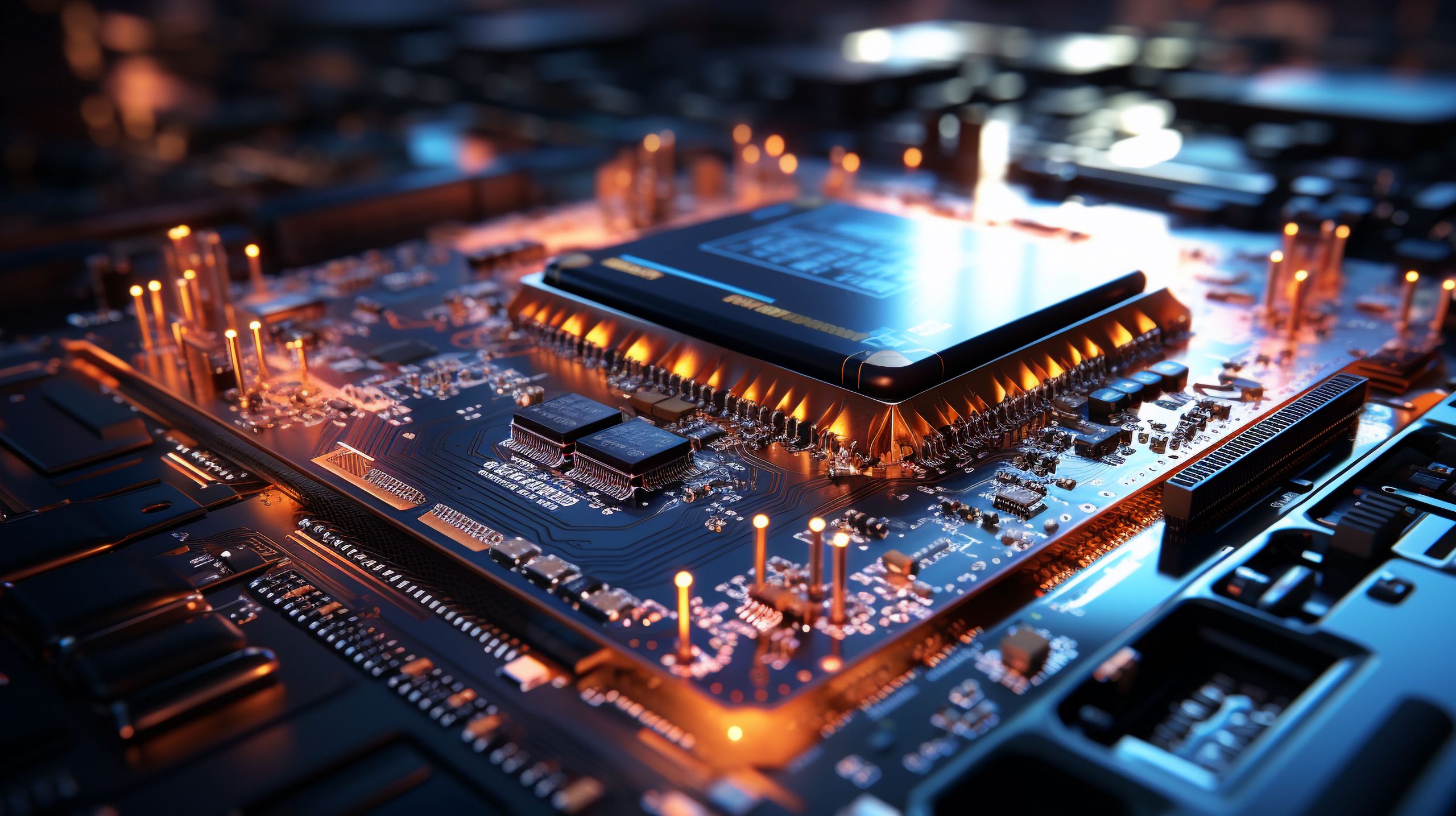
The Google Willow quantum chip takes this concept to breathtaking new levels. With 105 qubits working in harmony, Willow harnesses quantum mechanics—the fundamental rules governing particles at the atomic level—to process vast amounts of information simultaneously. But here’s where it gets truly mind-blowing: Willow doesn’t just add more qubits. It solves one of quantum computing’s most stubborn problems.
The 30-Year Problem Finally Solved (Quantum computing breakthrough UK)
For nearly three decades, quantum physicists have battled what seemed like an insurmountable obstacle: quantum error correction. Here’s the challenge in simple terms: quantum systems are incredibly fragile. The tiniest disturbance—a stray photon, a temperature fluctuation, even cosmic rays—can cause errors. Worse, conventional wisdom suggested that adding more qubits to increase computing power would inevitably increase error rates, making the system less reliable.
The Google Willow quantum chip flips this equation on its head. For the first time in history, researchers have demonstrated that adding more qubits actually decreases error rates exponentially. This breakthrough, achieved through sophisticated error correction techniques, represents what scientists call “below threshold” performance—the holy grail of quantum computing.
Dr. Hartmut Neven, founder of Google Quantum AI, explains this achievement transforms quantum computing from theoretical possibility to practical reality. The chip can maintain quantum information—keeping qubits “alive” and useful—for nearly 100 microseconds, five times longer than previous generations. That might sound like an impossibly short time, but in the quantum world, it’s an eternity.
A Mind-Bending Demonstration of Power
To showcase Willow’s capabilities, Google ran a benchmark test that defies comprehension. The Google Willow quantum chip completed a standard computational task in under five minutes. How long would the same calculation take one of today’s fastest supercomputers? Ten septillion years. That’s 10,000,000,000,000,000,000,000,000 years—a number so vast it makes the 13.8-billion-year age of our universe look like a cosmic blink.
This isn’t just impressive; it’s transformative. It proves that quantum computers can solve certain problems that classical computers simply cannot, no matter how advanced they become. We’re not talking about marginal improvements or incremental progress. This represents a fundamental shift in what’s computationally possible.
Britain’s Bold Quantum Bet
The partnership between Google and the UK’s National Quantum Computing Centre represents more than technological cooperation. It’s a strategic investment in Britain’s scientific future. UK researchers can now submit proposals to access the Google Willow quantum chip, collaborating directly with Google’s quantum experts and NQCC specialists to design and run cutting-edge experiments.
This initiative arrives at a pivotal moment. The global quantum race is intensifying, with tech giants and nations worldwide investing billions in quantum supremacy. China, the United States, and European nations are all pushing aggressively into quantum research. The UK government recognizes the stakes, committing £670 million to quantum technology development—a substantial investment that officials project could contribute £11 billion to the British economy by 2045.
Lord Vallance, UK Science Minister, emphasizes how access to the Google Willow quantum chip will position British researchers at the cutting edge. This collaboration focuses on practical applications across multiple disciplines: designing revolutionary medicines, accelerating the transition to clean energy, developing advanced materials, and unlocking discoveries in fundamental physics.
Real-World Impact: Where Quantum Meets Medicine
Let’s talk about what this actually means for your life. Quantum computing’s potential applications extend far beyond academic interest. In medicine, the Google Willow quantum chip could accelerate drug discovery dramatically. Currently, developing new pharmaceuticals takes years and costs billions, partly because simulating molecular interactions requires enormous computational power.
Quantum computers excel at modeling molecular behavior because molecules themselves operate according to quantum principles. A quantum computer can simulate how potential drug compounds interact with disease-causing proteins with unprecedented accuracy. This could cut drug development timelines from decades to years, potentially saving millions of lives and reducing healthcare costs.
Cancer treatment offers another promising application. Personalized medicine requires analyzing vast datasets of genetic information to determine optimal treatment protocols for individual patients. The processing power of quantum systems like the Google Willow quantum chip could enable real-time analysis of patient data, leading to more effective, precisely targeted therapies.
Revolutionizing Energy and Climate Solutions
Climate change presents humanity’s greatest challenge, and quantum computing might provide crucial tools for addressing it. The Google Willow quantum chip’s capabilities could revolutionize energy research in several ways.
First, battery technology. Current lithium-ion batteries face significant limitations in energy density, charging speed, and lifespan. Quantum simulations could model atomic-level interactions in novel battery materials, potentially leading to batteries that charge in minutes, last for decades, and store vastly more energy—transforming electric vehicles and renewable energy storage.
Second, carbon capture. Developing efficient catalysts for capturing and converting atmospheric carbon dioxide requires understanding complex chemical reactions. Quantum computers can model these reactions with precision impossible for classical computers, potentially unlocking breakthrough technologies for removing greenhouse gases from the atmosphere.
Third, nuclear fusion. Achieving sustainable fusion power—clean, abundant energy that mimics the sun’s power—requires managing incredibly complex plasma physics. Quantum computing could optimize fusion reactor designs, bringing this dream technology closer to reality.
The Technology Behind the Magic
Understanding what makes the Google Willow quantum chip special requires diving deeper into its architecture. Willow uses superconducting transmon qubits arranged in a square grid pattern. These aren’t ordinary transistors; they’re microscopic circuits cooled to temperatures colder than outer space—near absolute zero—where quantum effects dominate.
At these frigid temperatures, electrons behave according to quantum mechanics, enabling superposition and entanglement. Entanglement creates mysterious connections between qubits, where measuring one instantly affects others, regardless of physical distance.
The real breakthrough lies in how Willow manages errors. Quantum systems are notoriously noisy—interference constantly threatens to destroy quantum information. Google’s engineers developed sophisticated error correction codes that effectively create “logical qubits” from multiple physical qubits. As they increase the number of qubits, these error correction techniques become exponentially more effective, finally cracking the code on scalable quantum computing.
Global Competition and National Stakes
The quantum computing landscape resembles a new space race. Companies like IBM, Microsoft, Amazon, and startups like Quantinuum are all developing competing quantum technologies. Each approaches the challenge differently—some using superconducting circuits like Google, others exploring trapped ions, photonic systems, or topological qubits.
Quantinuum, headquartered in Cambridge and Colorado, recently achieved a $10 billion valuation, demonstrating investor confidence in quantum technology’s commercial potential. The UK hosts seven quantum computers at the National Quantum Computing Centre, representing diverse technological approaches from British firms including Quantum Motion, ORCA, and Oxford Ionics.
This competition drives innovation, but it also raises strategic concerns. Quantum computers powerful enough to break current encryption systems could threaten national security, financial systems, and personal privacy. Countries recognize that quantum supremacy isn’t just about scientific achievement—it’s about technological sovereignty and economic competitiveness.
The Quantum Echoes Algorithm
Beyond raw computing power, the Google Willow quantum chip has enabled new algorithmic breakthroughs. Google’s Quantum AI team recently demonstrated an algorithm called Quantum Echoes, which achieves verifiable quantum advantage—meaning the results can be confirmed and reproduced, establishing confidence in quantum computations.
Quantum Echoes works like sending ripples through a quantum system and measuring how information propagates. This technique can measure molecular structures with unprecedented precision, potentially revolutionizing chemistry. Imagine being able to design custom molecules for specific purposes—tailored medications with no side effects, materials with impossible properties, or catalysts that make currently expensive industrial processes cheap and clean.
Challenges and Skepticism
Despite the excitement, significant challenges remain. The Google Willow quantum chip, impressive as it is, still operates in what scientists call the “noisy intermediate-scale quantum” era. It can perform specific tasks brilliantly but lacks the scale and reliability for general-purpose computing.
Current error rates, while improved, still exceed levels needed for running large-scale quantum algorithms. Experts estimate that truly practical, fault-tolerant quantum computers capable of solving real-world problems at scale remain perhaps a decade away. Some critics argue that media coverage overstates quantum computing’s near-term practical significance.
There’s also the question of which problems quantum computers will actually prove useful for solving. While certain applications—like molecular simulation and cryptography—clearly benefit from quantum approaches, many everyday computing tasks won’t see improvements.
Economic Implications and Job Creation
The UK government’s £670 million investment in quantum technology isn’t just about scientific prestige. Officials project quantum computing could add £11 billion annually to the British economy by 2045. This value creation comes from multiple sources.
First, direct employment in quantum technology companies and research institutions. The quantum industry requires highly specialized talent—quantum physicists, cryogenic engineers, algorithm designers, and quantum software developers. Universities are already expanding quantum computing programs to train the next generation of quantum professionals.
Second, indirect economic benefits from applying quantum solutions to other industries. Pharmaceutical companies might license quantum computing access for drug discovery. Energy companies could use quantum optimization for power grid management. Financial institutions might employ quantum algorithms for portfolio optimization and risk analysis.
Third, attracting international investment and talent. By establishing itself as a quantum computing hub, the UK positions itself to capture a larger share of the global quantum technology market, estimated to reach hundreds of billions of dollars in the coming decades.
Student and Researcher Opportunities
For aspiring scientists, the Google Willow quantum chip collaboration opens unprecedented opportunities. PhD students and postdoctoral researchers in physics, chemistry, computer science, and mathematics can submit proposals for experiments using world-class quantum hardware.
This access dramatically accelerates research timelines. Instead of spending years building quantum computers, researchers can focus on developing algorithms, testing theories, and making discoveries. It’s like giving every aspiring astronomer access to the Hubble Space Telescope—democratizing access to cutting-edge tools.
The NQCC plans to select proposals based on scientific merit and potential impact. Successful applicants will work directly with Google’s quantum engineers and NQCC specialists, receiving technical support and computational resources. This mentorship component could prove as valuable as the hardware access itself.
Previous Quantum Discoveries Using Willow
The Google Willow quantum chip has already contributed to scientific breakthroughs. In September 2025, researchers used a 58-qubit configuration of Willow to observe an exotic phase of matter never before seen—a quantum state that defies classical physics descriptions.
These “exotic phases” exist only under specific conditions and exhibit properties impossible in everyday matter. Understanding them could lead to revolutionary materials with zero electrical resistance at room temperature (currently, superconductors only work at extremely cold temperatures), or materials that conduct electricity perfectly in only one direction.
Looking Forward: The Next Decade
Over the next ten years, quantum computing will likely transition from research curiosity to practical tool. The Google Willow quantum chip represents a crucial milestone on this journey. Experts predict several key developments:
By 2027-2028, we might see the first commercially valuable quantum applications, probably in specialized areas like materials simulation or optimization problems.
By 2030-2032, quantum computers could begin contributing to drug discovery pipelines, with pharmaceutical companies integrating quantum simulations into development workflows.
By 2035, quantum computing might become routinely available as a cloud service, with businesses accessing quantum processing power remotely for specific computational tasks.
Throughout this period, error correction will continue improving, qubit counts will increase, and programming tools will become more user-friendly. The field will gradually mature from specialized research to commercial technology.
What This Means for You
You might wonder how quantum computing affects your daily life. Initially, the impact will be indirect. You won’t buy a quantum computer for your home, but you’ll benefit from quantum-developed medications, more efficient products designed using quantum simulations, and services optimized by quantum algorithms.
Eventually, quantum computing could enable technologies we can’t yet imagine—just as the first computers in the 1940s couldn’t predict smartphones, social media, or artificial intelligence. The Google Willow quantum chip and collaborations like this UK partnership are laying groundwork for a future where quantum and classical computing work together, each handling tasks it’s best suited for.
The Bottom Line
The partnership between Google and the UK National Quantum Computing Centre, centered on the Google Willow quantum chip, represents more than technological sharing. It’s a strategic bet on Britain’s scientific future, an investment in solving humanity’s toughest challenges, and a recognition that quantum computing’s moment has finally arrived.
After decades of theoretical work and incremental progress, quantum computing is transitioning from laboratory curiosity to practical tool. The Google Willow quantum chip’s breakthroughs in error correction and computational performance prove that large-scale, reliable quantum computers are possible.
For UK researchers, this collaboration offers a once-in-a-generation opportunity to work with the world’s most advanced quantum hardware. For Britain, it positions the nation at the forefront of the quantum revolution. For humanity, it brings us closer to solving problems that have seemed unsolvable—curing diseases, reversing climate change, and understanding the deepest mysteries of nature.
The quantum future isn’t coming. Thanks to the Google Willow quantum chip, it’s already here.
FAQs
Q1: What is the Google Willow quantum chip?
The Google Willow quantum chip is a 105-qubit quantum processor that achieves exponential error reduction as it scales, completing calculations in minutes that would take supercomputers septillions of years.
Q2: How can UK researchers access the Willow processor?
UK researchers can submit proposals through the National Quantum Computing Centre partnership with Google, which will provide selected projects with processor access and technical support.
Q3: What makes quantum computers different from regular computers?
Quantum computers use qubits that can exist in multiple states simultaneously through superposition, enabling them to process vast amounts of information in parallel, unlike classical computers’ binary bits.
Q4: When will quantum computers affect everyday life?
Indirect benefits may appear within 3-5 years through improved drugs and materials, while more direct applications will emerge over the next decade as technology matures.
Q5: What can quantum computers solve that regular computers cannot?
Quantum computers excel at molecular simulations, optimization problems, cryptography, and modeling quantum systems—tasks where the number of possibilities grows exponentially.









4 Comments
https://shorturl.fm/rsYmN
https://shorturl.fm/rsYmN
https://shorturl.fm/cljw2
https://shorturl.fm/NW8Vf